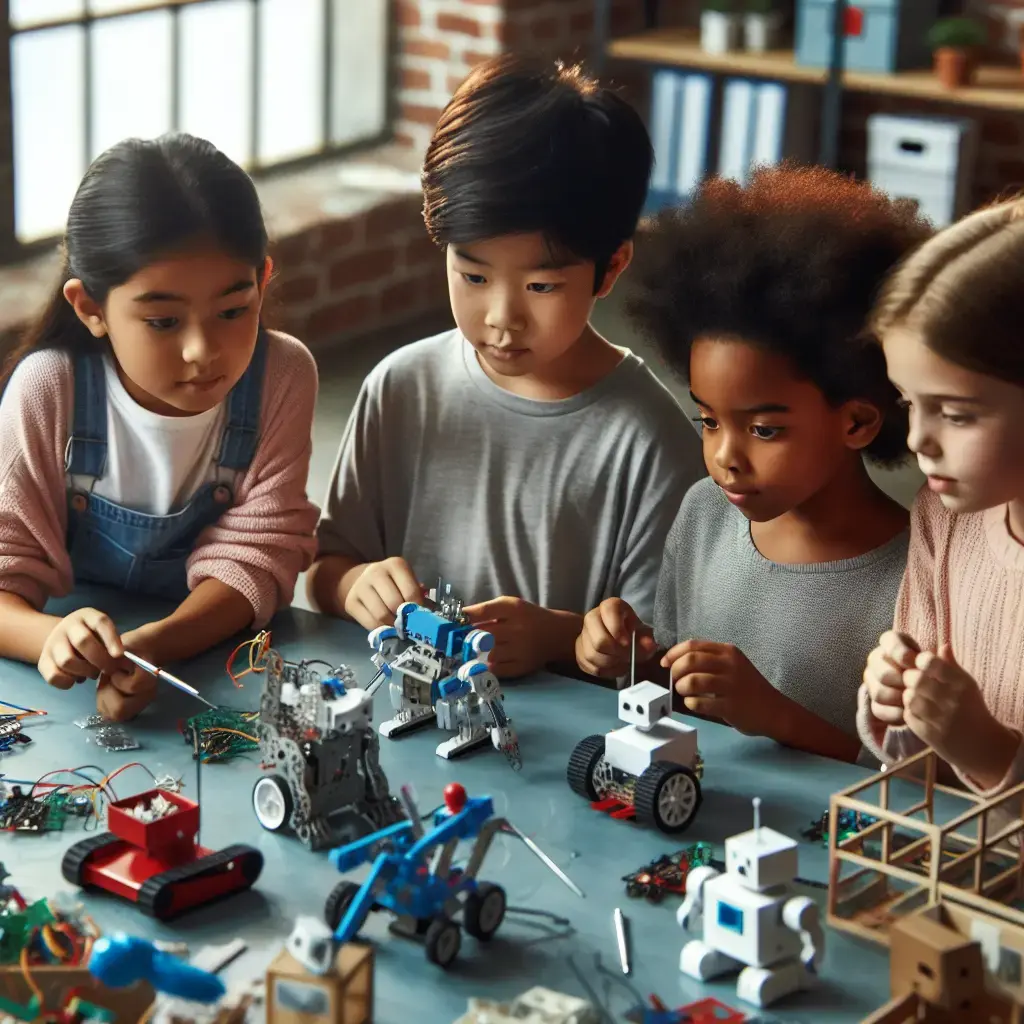
Exploring the Exciting World of Robotics for Young Learners
In an era defined by technological innovation, introducing robotics to kids has become an essential part of modern education. Engaging young learners in robotics not only sparks their curiosity but also lays a strong foundation for STEM education. Through hands-on robotics for children, students embark on a fascinating journey that merges creativity with technology. Educational robotics provides an interactive platform where beginner robotics for kids seamlessly blend with fundamental skills in coding and engineering. This approach ensures a comprehensive introduction to robotics for children, fostering a love for learning that extends beyond the classroom.
The Growing Importance of Robotics in Education
Robotics for kids offers more than just fun and games—it’s a gateway to understanding complex STEM concepts. A prime example of the expanding role of robotics in education is Elon Musk’s private school in Texas, which has recently started accepting applications for the 2024-2025 school year. This initiative underscores the increasing emphasis on STEM education for kids, where robotics plays a central role. Schools like these are laying the groundwork for a future where young learners can seamlessly transition into advanced technological studies.
Hands-On Learning with NASA's Educational Initiatives
To inspire curiosity and enhance understanding, NASA has released a collection of educational videos and experiments aimed at young learners. These resources are designed to make learning about space both engaging and accessible, providing a dynamic platform for students to explore scientific concepts through interactive means. Such initiatives align perfectly with the ethos of educational robotics, which emphasizes hands-on robotics for children as a way to ignite passion and understanding in STEM fields.
Innovative Approaches to Teaching Robotics
One of the most promising developments in teaching robotics to children is the integration of play into learning, as seen in Tanzania's STEM-based theme parks. Dr. Lwidiko Mhamilawa champions this approach, demonstrating that when children learn through play, they develop a deeper understanding and retain information more effectively. This method aligns with the principles of beginner robotics for kids, where learning is both interactive and fun, fostering a long-term interest in STEM subjects.
Addressing Creativity and Problem-Solving Skills
The notion that creativity fundamentally stems from memorization has gained traction in educational circles, emphasizing the need for a robust robotics curriculum for young learners. By engaging in robotics activities for young learners, students not only memorize coding sequences but also learn to apply them creatively to solve problems. This dual focus helps cultivate essential problem-solving skills while nurturing creativity—a crucial combination for future success. Read more on Scientific American.
Building Resilience and Teamwork
Educational robotics isn't just about machines and coding; it’s about building character and resilience. Recent discussions about creating kinder schools highlight the importance of fostering environments where students can work collaboratively, overcoming challenges together rather than competing against one another. Psychology Today emphasizes how robotics workshops for kids offer an environment where teamwork is as vital as technical skill. This approach prepares students to tackle real-world challenges with confidence and collaboration.
Balancing Screen Time with Practical Engagement
In an age where screentime is often scrutinized, educational video games have emerged as a beneficial medium for teaching critical subjects like math and science. Yet, it's crucial to balance digital interaction with physical activities. Edutopia discusses how robotics projects for young learners provide this balance by allowing students to apply what they learn on-screen in tangible ways through building and programming robots. This practical engagement reinforces learning and keeps students motivated and invested in their education.
Encouraging Holistic Development in a STEM-Driven World
A psychologist's recent publication discusses a two-step method to raise happy and confident children in our increasingly STEM-driven world. The key lies in harnessing collaboration and technology while dispelling the myth that technical talents are "geeky." By engaging kids in robotics, educators can create an environment where students feel valued and empowered, leading to holistic development that extends beyond academic achievement. Explore this topic further on The Atlantic.
Diverse Educational Opportunities
As we explore diverse educational models, Masterpiece Academy stands out as an innovative example of low-cost creative schooling options spreading nationwide. Such schools offer unique opportunities to integrate robotics into their curricula, providing students with a rich array of experiences that combine creativity, technology, and hands-on learning. These models are crucial for ensuring access to quality STEM education across different socio-economic backgrounds.
Conclusion
Exploring the world of robotics for young learners is not just about preparing them for future careers; it's about equipping them with the skills needed to thrive in an increasingly complex world. By incorporating recent trends and educational strategies—from NASA's interactive videos to innovative schooling options—educators can create a comprehensive introduction to robotics for children that inspires lifelong learning and curiosity. As these young minds engage with robotics today, they are poised to become tomorrow's leaders, ready to tackle the challenges of our ever-evolving technological landscape.
We invite you to reflect on these insights and consider how you can integrate robotics into your educational practices or home learning environment. Share your experiences or thoughts on this transformative approach to learning in the comments below.
Together, let's inspire a generation of thinkers and creators ready to tackle the challenges of our evolving technological landscape.
Author: David Langley